What Is Sleep Anxiety?
Sleep anxiety is an involuntary state of physiological and cognitive hyperarousal triggered by bedtime or the fear of insomnia, which is resolved by releasing the effort to force sleep and resetting conditioned bedtime distress.
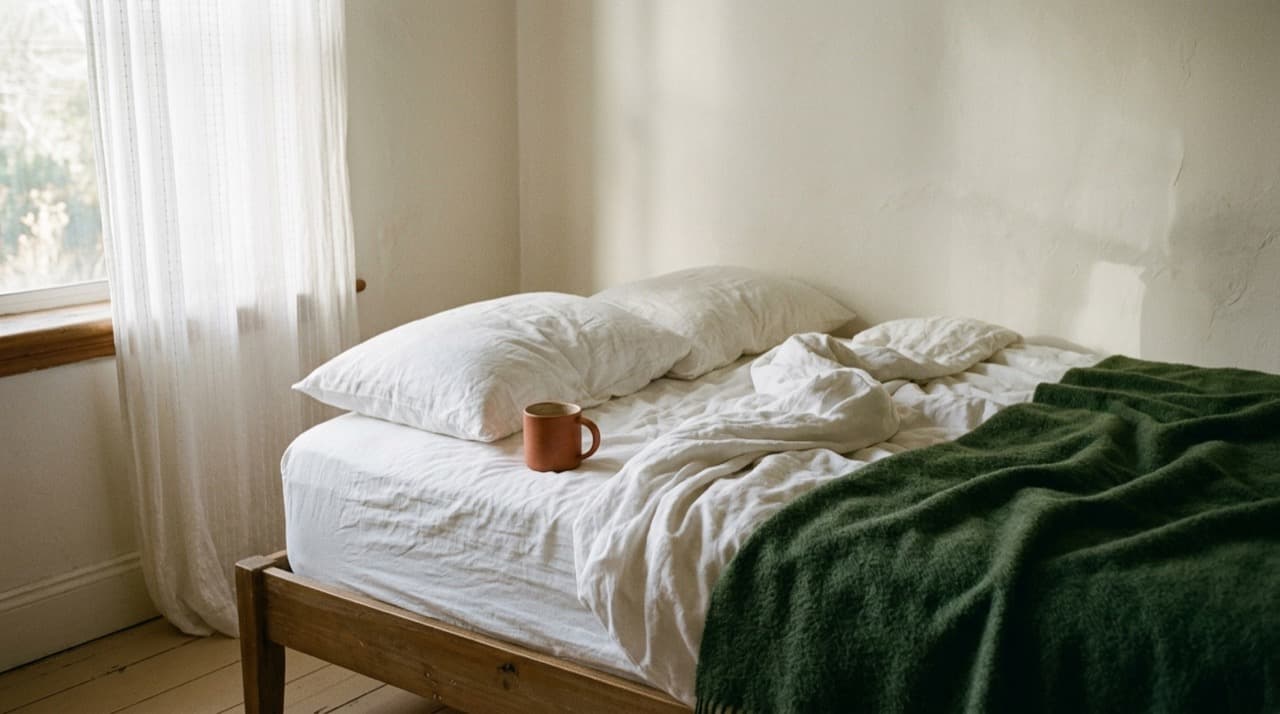
Sleep anxiety is a persistent state of anticipatory dread and physiological alertness surrounding the process of falling asleep, where the fear of sleeplessness itself triggers the autonomic nervous system to stay awake. If you are reading this in the middle of the night, you know this exhausting paradox intimately. You spent the day drained, yearning for your pillow, yet the moment the bedroom goes dark, an involuntary rush of vigilance jolts through your chest. Your heart accelerates, your mind starts racing, and you begin mentally calculating how damaged tomorrow will be if you cannot drift off immediately. This is neither an emotional flaw nor a failure of will. It is a biological survival response activating at precisely the wrong moment: your brain is treating the prospect of sleeplessness as an urgent crisis that demands vigilant attention.
The fundamental dilemma of bedtime distress is that sleep cannot be compelled. Like your pulse or digestive system, slumber is an involuntary function that unfolds only when the nervous system registers absolute psychological safety. Trying to force yourself to fall asleep generates the exact neurochemical state that keeps you awake. By understanding why your brain links the bed with danger and learning how to dismantle that conditioned pattern, you can release the struggle and allow natural rest to return.
Why does sleep anxiety peak right as you get into bed?
During the day, external demands shield you from internal distress. Work, conversations, household chores, and ambient stimuli occupy your attention, leaving little room for brooding. But when you switch off the lamp, that protective buffer collapses instantly.
In the dark and silence, your brain activates the default mode network—the neural circuit responsible for introspection, memory processing, and scanning for risks. Without external tasks to resolve, the mind naturally turns inward. If you have spent recent nights tossing and turning in frustration, your brain flags the upcoming night as a prime vulnerability.
This reaction stems from classical Pavlovian conditioning, known in sleep medicine as conditioned arousal. Ideally, the tactile comfort of a pillow and dark sheets signals safety and relaxation. However, when you spend hours lying in bed feeling desperate, resentful, and exhausted, your brain establishes a new associative link: the bed equals threat and wakeful frustration. Consequently, simply climbing between the sheets triggers a surge of vigilance before your head even settles.
What happens in your body when nocturnal panic takes over?
The inability to sleep under emotional pressure is fundamentally a physiological event. Your amygdala, the brain's alarm hub, cannot differentiate between physical hazards and the distressing thought that tomorrow will be ruined without sleep. In response, it signals the sympathetic nervous system to launch the fight-or-flight response.
Adrenaline and cortisol surge into your circulation, initiating physical changes meant for physical confrontation rather than rest:
Your heart pumps harder to supply oxygen to major muscle groups, creating a thumping sensation in your ears or chest. Peripheral blood vessels narrow, often leaving your fingers or toes cold and clammy. Breathing becomes rapid and shallow, shifting blood gases and producing lightheadedness. Meanwhile, muscle tension increases across your shoulders and jaw.
Natural sleep requires the exact reverse: parasympathetic dominance, lower heart rate, relaxed muscles, and a modest dip in core body temperature. When adrenaline surges, it overrides your natural sleep drive. Even if your brain is flooded with adenosine—the chemical that builds homeostatic sleep pressure throughout the day—the physiological alert overrides your fatigue. You remain exhausted yet neurologically barred from sleep.
How can you tell ordinary insomnia apart from an anxiety disorder?
Almost everyone encounters occasional sleeplessness. An intense life event, grief, or a major deadline can disrupt circadian rhythms for several nights. This is acute, situational insomnia. It has a clear external trigger, and as that circumstance eases, sleep typically normalizes without intervention.
In sleep-related anxiety, however, the disturbance develops an independent life. The initial trigger may have passed months ago, but the fear of not sleeping has replaced it as the chronic stressor. Individuals start reshaping their entire lives around bedtime, which intensifies the psychological pressure on each evening.
The table below outlines the core differences between temporary sleep disruption and an entrenched anxiety cycle:
| Dimension | Situational Sleep Disruption | Sleep-Related Anxiety Cycle |
|---|---|---|
| Primary Catalyst | Identifiable external stressor or temporary illness | Fear of insomnia itself and anticipatory dread of bedtime |
| Daytime Focus | Centered on the external life event causing the stress | Continuous mental tracking of fatigue and dreading the night |
| Perception of the Bed | The bed remains a comfortable place of rest | The bedroom triggers automatic physiological vigilance |
| Nighttime Behavior | Quiet waiting until tiredness naturally returns | Compulsive clock-watching and desperate efforts to relax |
| Resolution Pattern | Resolves naturally once the external situation settles | Persists through avoidance and unhelpful compensation |
Recognizing these distinctions helps demystify your experience. Guidelines from the American Psychological Association (APA) emphasize that when bedtime distress becomes a self-reinforcing loop of worry, cognitive and behavioral interventions provide far more reliable recovery than waiting for sleep to correct itself.
Should you stay in bed and wait, or get up when your mind races?
When sleep eludes you, your initial impulse is likely to stay in bed, squeeze your eyes shut, and try harder. You might tell yourself that resting your body quietly is better than getting up. Yet when nighttime worry is present, this intuitive approach deepens the trap.
Lying awake while feeling frustrated or alarmed strengthens the neurological association between your bed and distress. Every hour spent tossing and turning teaches your brain that the mattress is a place for problem-solving and worry.
To break this conditioned bond, clinicians rely on stimulus control therapy. The core guideline is straightforward: if you have been in bed for approximately twenty minutes and remain agitated or alert, you should leave the bed.
Sleep cannot be forced through willpower; the fastest way to invite sleep is to abandon the struggle for it, leave the bed when wakefulness brings distress, and let biological sleep pressure rebuild on its own terms.
Move to another dimly lit room or sit in a comfortable armchair. Keep lights warm and low, and avoid smartphones or computer screens, as blue light directly suppresses melatonin release. Choose a low-stimulation activity: read a printed book, listen to calming instrumental music, or practice gentle breathing.
Do not watch the clock. Return to bed only when genuine physiological sleepiness arrives—indicated by heavy eyelids and nodding off. If you get back into bed and find yourself alert twenty minutes later, repeat the process calmly. Over several nights, this habit breaks the learned reflex of nighttime vigilance.
What practical steps can you take tonight to calm nighttime worry?
If you are struggling in the dark right now, complex theory is unhelpful. You need immediate, grounded behavioral anchors to lower your nervous system's alarm level.
These sequential steps offer a practical framework for stabilizing tonight's distress:
- Hide all clocks and phones from your line of sight to eliminate the panic of counting remaining hours before sunrise.
- Step out of bed after twenty minutes of wakeful distress and move to a dimly lit chair to remove the performance pressure of sleeping.
- Write down racing concerns on a physical notepad, transferring mental loops onto paper so your working memory can stand down.
- Lengthen your exhalations by breathing in for four counts and exhaling smoothly for seven counts to engage the vagus nerve and slow your heart.
- Maintain your standard morning wake-up time regardless of how much you slept, preserving biological sleep drive for tomorrow evening.
When is it time to seek professional support from a licensed therapist?
While self-guided tools provide relief for mild tension, chronic nocturnal anxiety frequently requires professional therapeutic support. If sleep disruption occurs at least three nights a week, persists beyond three months, or impairs your daytime focus, work performance, or mood, consulting a professional is the recommended step.
A primary care physician should first examine physical factors, such as thyroid function, sleep apnea, or vitamin deficiencies. Once physical issues are addressed, structured psychotherapy represents the gold standard. Clinical guidelines from the National Institute for Health and Care Excellence (NICE) establish Cognitive Behavioral Therapy for Insomnia (CBT-I) as the primary first-line intervention for chronic sleep difficulties, proving more effective and durable than medication by dismantling conditioned arousal.
This post is published for educational and informational purposes only; it does not constitute clinical diagnosis, medical counsel, or psychiatric treatment. If nocturnal panic is accompanied by severe depression or thoughts of self-harm, please contact an emergency helpline or local crisis service immediately for confidential assistance.
For those curious about their baseline anxiety, taking a structured anxiety test can offer helpful clarity. When you are ready to work through sleep-related anxiety with specialized guidance, Seansly connects you with licensed therapists and psychologists who can help you restore sustainable, peaceful sleep.
Seansly Team
This article draws on the frameworks and sources it names; it has not been reviewed by a clinician.
Looking for the right therapist?
Get offers from psychologists and pay the therapist directly - Seansly never takes a commission.
Request supportYou might also like
- BurnoutWhat Is Burnout Syndrome, and How Can You Begin to Recover?Burnout syndrome is a state of severe physical, mental, and emotional exhaustion caused by prolonged chronic stress, and you can begin to recover by establishing rigid workload boundaries, nervous system rest, and gradual somatic recalibration.8 min read
- Sleep & restHow Does a Generalized Anxiety Disorder Test Work, and What Can It Tell You?A generalized anxiety disorder test evaluates self-reported symptoms of excessive worry, muscle tension, and restlessness over recent weeks, helping you identify symptom severity while serving as a structured screening tool rather than a formal medical diagnosis.8 min read
- Sleep & restSleep Anxiety on Reddit: What People Describe and What Actually HelpsLate-night forum discussions on Reddit confirm that nocturnal panic stems from conditioned sleep dread and the struggle to force rest, an exhaustion cycle resolved through stimulus control rather than bedtime willpower.8 min read